
 Free Delivery & Return
 365-Day Returns
 10 Million Happy Customers
 500,000 Products in Stock

Transform Your Home on a Budget: Easy and Affordable Interior Upgrades
Reviewed by the Beliani Content Team · Updated November 2026
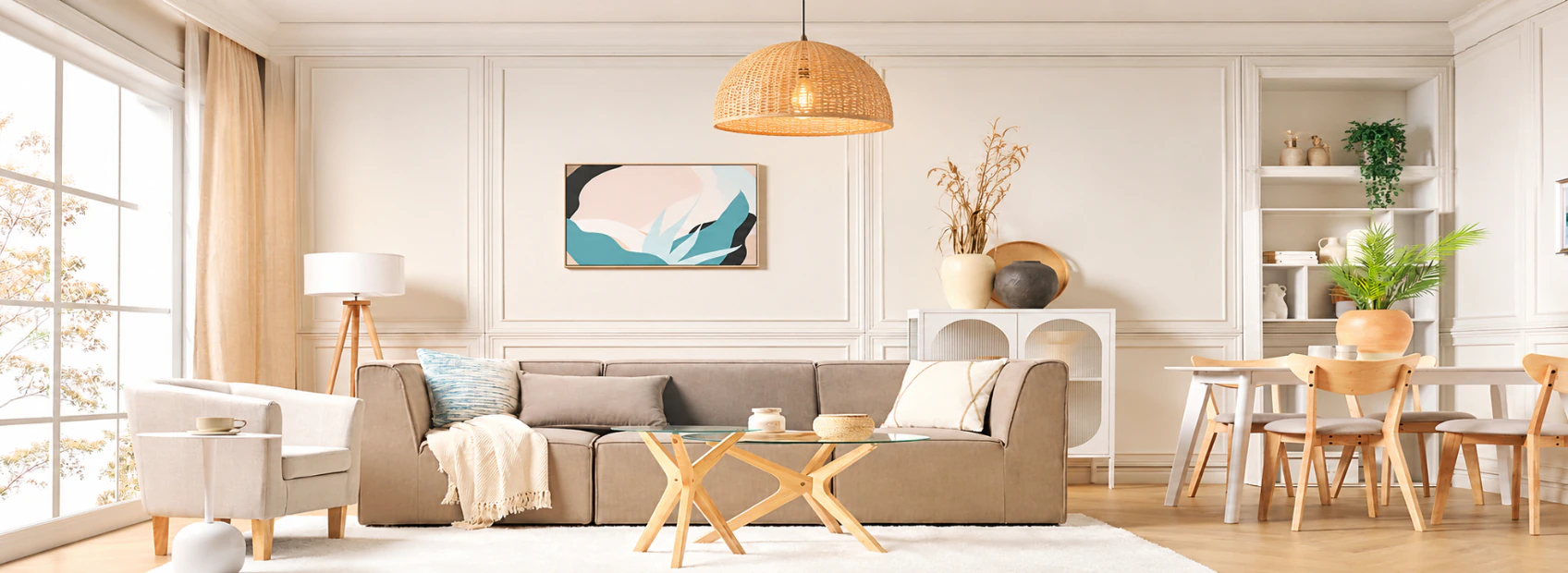
A home rarely needs a full renovation to feel new again. Most of the time, it just needs a few of the right swaps in the right places: a rug, a mirror, a change in lighting. This guide walks through where a small spend makes the biggest visible difference, so you know what to change first and what to leave alone.
In short
What's the cheapest way to make a room feel updated?
Start with what you already own: decluttering surfaces and rearranging furniture costs nothing and changes how a room feels straight away. After that, small textile and decor swaps, such as a new rug, cushion covers or a well-placed mirror, give the most visible change for the least money. Replacing furniture should be the last step, not the first.
Three things change where you should start:
- How much of your current furniture is still in good condition
- Whether the room gets limited natural light, which makes mirrors and lighting matter more
- Whether you rent, which favours non-permanent changes over anything fixed to the wall
What should I do before buying anything new?
Before buying anything, clear surfaces of clutter and look at how your furniture is arranged. Moving a sofa away from the wall, turning a chair to face a window, or swapping a lamp between two rooms can change how a space feels without spending a penny. This step also shows you which gaps are genuinely worth filling, so you don't buy decor you don't need.
1
Declutter surfaces
Clear shelves, tables and worktops before styling anything new on them.
2
Rearrange furniture
Try a new layout before deciding anything needs replacing.
3
Swap between rooms
Move a lamp, mirror or cushion to a room where it works harder.
How do I choose a rug that anchors the room?
A well-chosen rug softens a hard floor, adds warmth underfoot, and visually ties a seating area together. In an open-plan layout, a rug also helps define where one zone ends and another begins, which makes the whole space feel more intentional. As a general rule, choose a rug large enough that the front legs of your main seating rest on it, rather than one that floats in the middle of the room looking undersized.
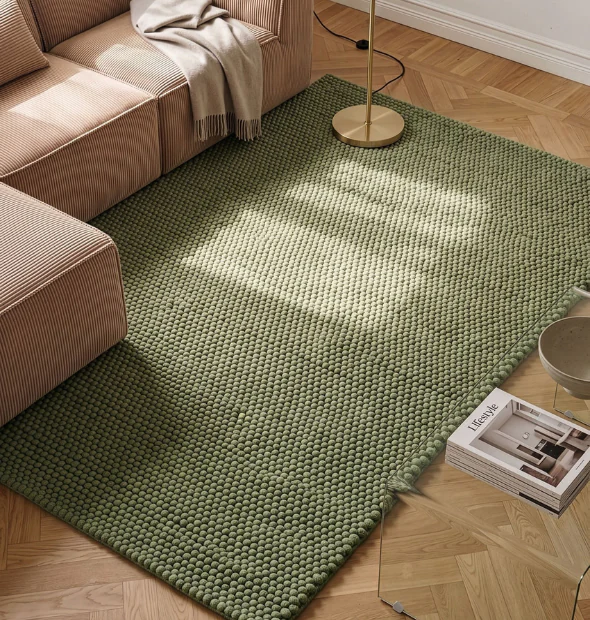
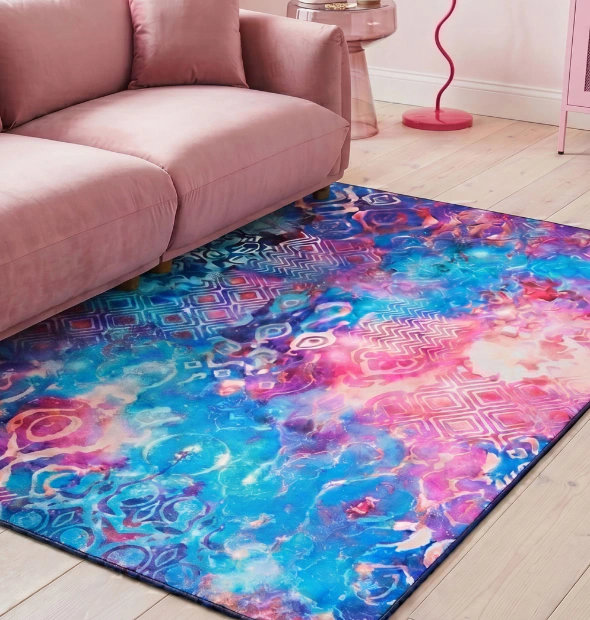
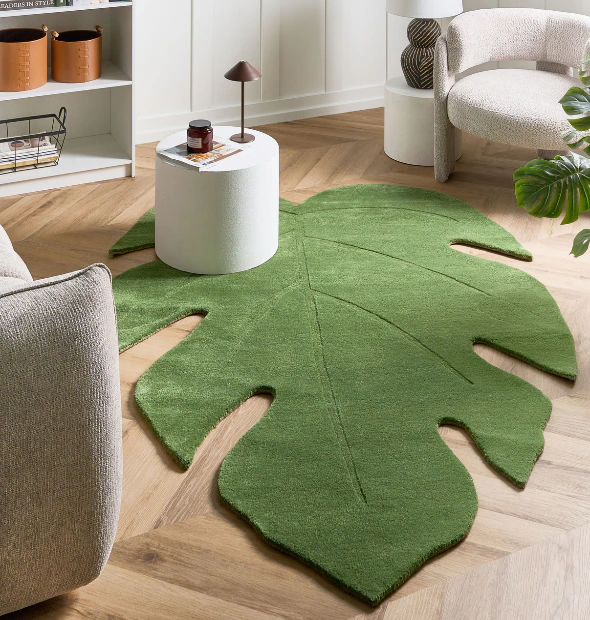
Shop now: products in the pictures
How can cushions and throws refresh a room?
Changing cushions and throws is one of the quickest, least expensive ways to shift a room's mood. Bold patterns add a pop of colour, while soft, textured fabrics create a calmer, more relaxed feel. Because they're easy to swap, cushions and throws are also the simplest way to update a room for the seasons without buying new furniture.
Use covers, not whole new cushions
Cushion covers cost less than full cushions, take up far less storage space, and let you change the look of a sofa in minutes whenever you want a different colour or pattern.
Shop now: scatter cushions and throws
Which wall art works on a tight budget?
Blank walls are an easy place to add personality for little cost. A single framed print, an abstract canvas, or a small gallery wall of personal photos all work, and none require any building work. Keep frame styles consistent across a gallery wall so the collection reads as one considered display rather than a mismatched collection of odd pieces.
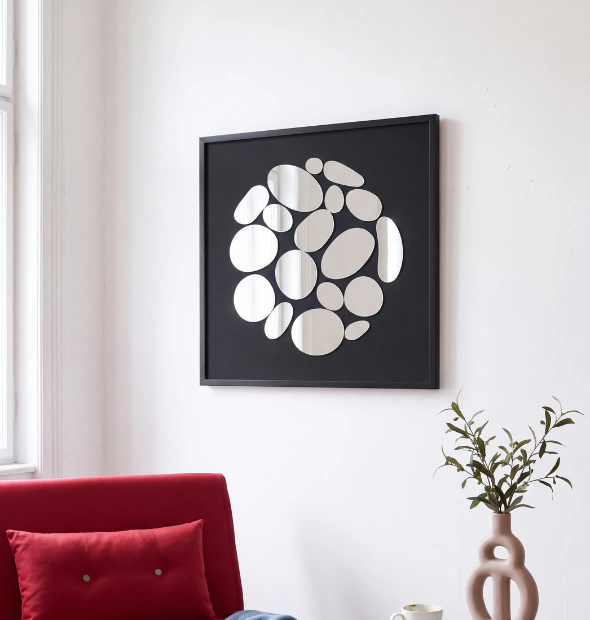
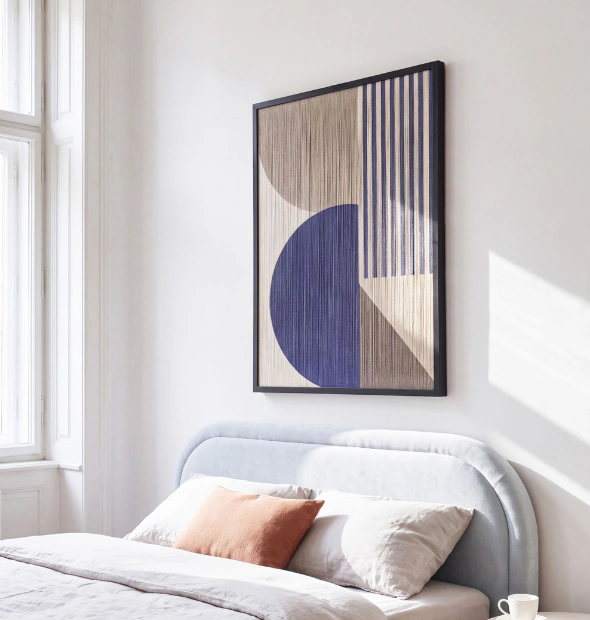
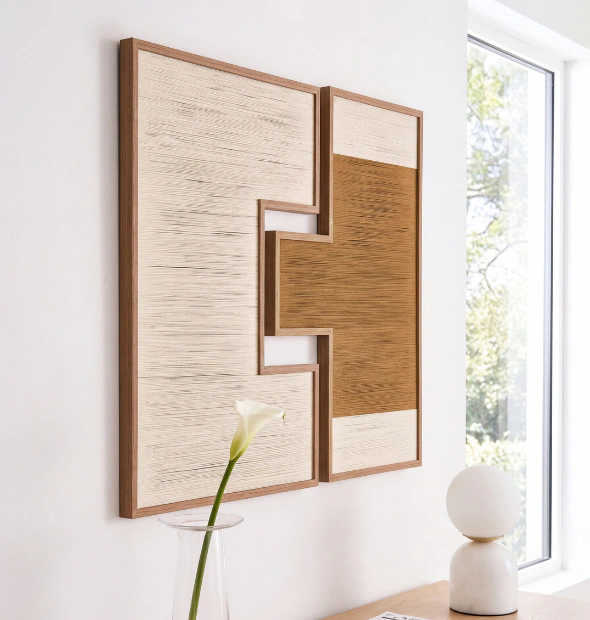
Shop now: products in the pictures
How do mirrors make a room feel bigger and brighter?
Mirrors are one of the most effective low-cost tools in interior design. They reflect light around a room, making it feel brighter, and they make a small or dark space feel larger simply by doubling what the eye sees. A single statement mirror can also act as a focal point in a room that otherwise has little going on.
Place a mirror opposite a window
Hanging a mirror directly opposite a window reflects daylight back into the room, which is the simplest way to make a space feel brighter without adding any extra lighting.
Shop now: wall art and mirrors
How can lighting change a room for little cost?
Lighting shapes the mood of a room more than almost any other single factor. A single overhead light tends to leave a room feeling flat, while a mix of a floor lamp, a table lamp and a smaller accent light creates a warmer, more layered feel. Experimenting with different bulb warmths and shade styles is a low-cost way to find the right atmosphere for each room before you commit to anything permanent.
Shop now: lighting
How many plants does a budget refresh actually need?
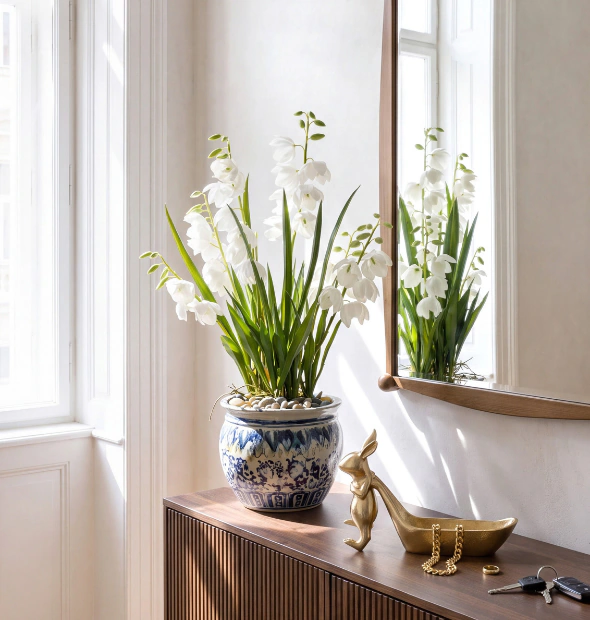
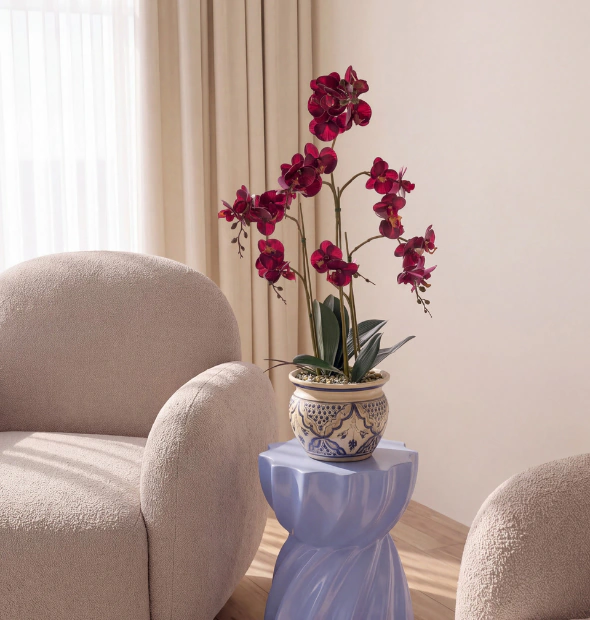
Greenery is one of the most affordable ways to add colour and life to a room. Group a few plants of different heights on a tabletop, or hang one in a pot to use space you'd otherwise leave empty. You don't need many: two or three well-placed plants usually have more impact than filling every surface.
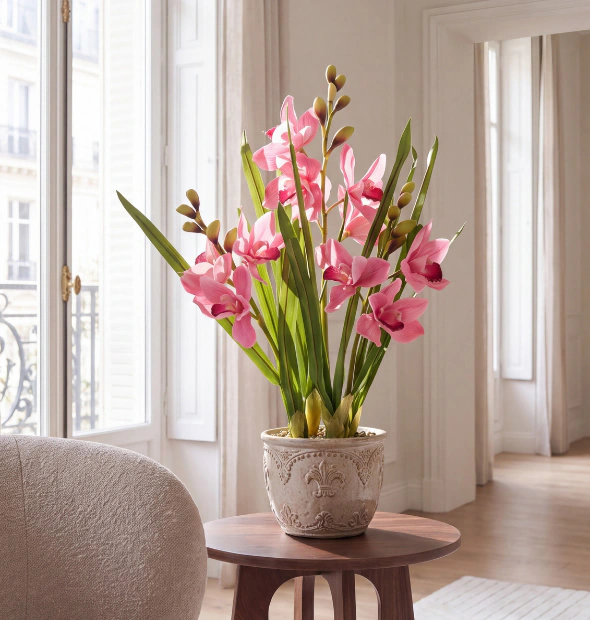
Shop now: products in the pictures
What small details finish off a budget makeover?
The smallest pieces are often what make a room feel finished. A vase, a scented candle, or a few ornaments grouped on a shelf add warmth and make a space feel lived-in rather than staged. Stacking a couple of books under a vase or candle is a simple way to create height and variation on an otherwise flat surface.
Which update should I start with?
Use this as a quick reference to match each idea to the time and budget you actually have, then work down the list as either grows.
| Update | Typical cost | Time needed | Best for |
|---|---|---|---|
| Decluttering and rearranging | Free | Under an hour | A fast reset before you buy anything |
| A new rug | Low to medium | Minutes to place | Anchoring a seating area |
| Cushions and throws | Low | Minutes | A quick seasonal colour change |
| Wall art | Low | Under an hour | Filling blank walls with personality |
| A mirror | Low to medium | Minutes to hang | Brightening a dark or small room |
| Lighting | Low to medium | Under an hour | Changing the whole mood of a room |
| Plants | Low | Minutes | Adding colour to empty corners |
| Small details | Low | Minutes | Finishing touches on shelves and tables |
What are the best renter-friendly updates?
Most of the updates in this guide leave no marks, which makes them a good fit for a rented home. Check your tenancy agreement first, and ask your landlord before making any change that is fixed to a wall, floor or ceiling.
Rugs, cushions and throws
Textiles need no fixings, change a room's look straight away and move with you when you do.
Floor and table lamps
Lamps add light and mood without touching the ceiling or the wall.
A freestanding mirror
Lean a large mirror against the wall instead of hanging it, ideally opposite a window to bounce daylight around the room.
Removable wall art fixings
Use removable strips instead of drilling, and check the weight limit on the pack before you hang a frame.
Shop now: rugs, scatter cushions, lighting and mirrors
Where should I start in each room?
Choose the room you're updating to see the three changes to make first, in this order.
Rug, cushions and layered lighting.
Flip for decorating ideasWhere to start in the living room
- Rearrange the seating and anchor it with a rug.
- Swap in new cushion covers and a throw.
- Layer a floor lamp and a table lamp instead of relying on the main light.
Shop now: rugs, scatter cushions and lighting
A mirror, a framed print and clear surfaces.
Flip for decorating ideasMirrors, layered light and cleared surfaces.
Flip for decorating ideasWhat should I check before I buy?
Before you add anything new to a room, work through these checks so your money goes where it will actually show.
- Measure the space for a rug so your main seating's front legs will sit on it, not beside it
- Check cushion and throw colours against your existing sofa or bedding, not just against each other
- Hang wall art or a mirror with its centre roughly 145-152 cm from the floor on an open wall or in a hallway, and a little lower in rooms where you mostly sit
- Above a sofa, leave a gap of about 15-20 cm between the top of the sofa and the bottom edge of the frame or mirror
- Check whether your tenancy allows wall fixings, and choose freestanding or command-strip options if it doesn't
- Match new lamp bulbs to your existing fittings, since screw and pin fittings aren't interchangeable
- Check a plant's light needs against the room before buying it, rather than after it starts to struggle
Frequently asked questions
Do budget updates like these work in a rented home?
Yes, most of the ideas here are non-permanent: rugs, cushions, freestanding mirrors, lamps and decor pieces move with you and leave no marks. Stick to freestanding or removable items such as command-strip wall art if your tenancy restricts drilling.
Is it better to buy a few statement pieces or lots of small ones?
On a tight budget, one or two well-chosen statement pieces, such as a patterned rug or a large mirror, generally have more visual impact than many small trinkets. A room with too many small items can look cluttered rather than considered, even if each piece was inexpensive.
Should I choose real or artificial plants on a tight budget?
Artificial plants are the more budget-predictable choice, since they need no replacing and tolerate low light, while real plants cost less upfront but need the right light and regular care to survive. Choose real plants for well-lit rooms where you can keep up with watering, and artificial ones for darker corners or low-maintenance spaces.
How many decorative accessories are too many for one room?
There is no fixed number, but a good test is to group items in odd numbers of two or three per surface and leave some empty space around them. If a shelf or table looks busy rather than styled, remove one item rather than adding another.
Can I mix different textures and patterns without the room looking cluttered?
Yes, mixing textures such as a woven rug, a knit throw and a smooth ceramic vase adds depth rather than clutter, as long as you keep a consistent colour palette across the room. Limit bold patterns to one or two items, such as the rug or the cushions, rather than combining several busy patterns at once.
