
 Free Delivery & Return
 365-Day Returns
 10 Million Happy Customers
 500,000 Products in Stock


Kitchen Accessories


Kitchen Accessories
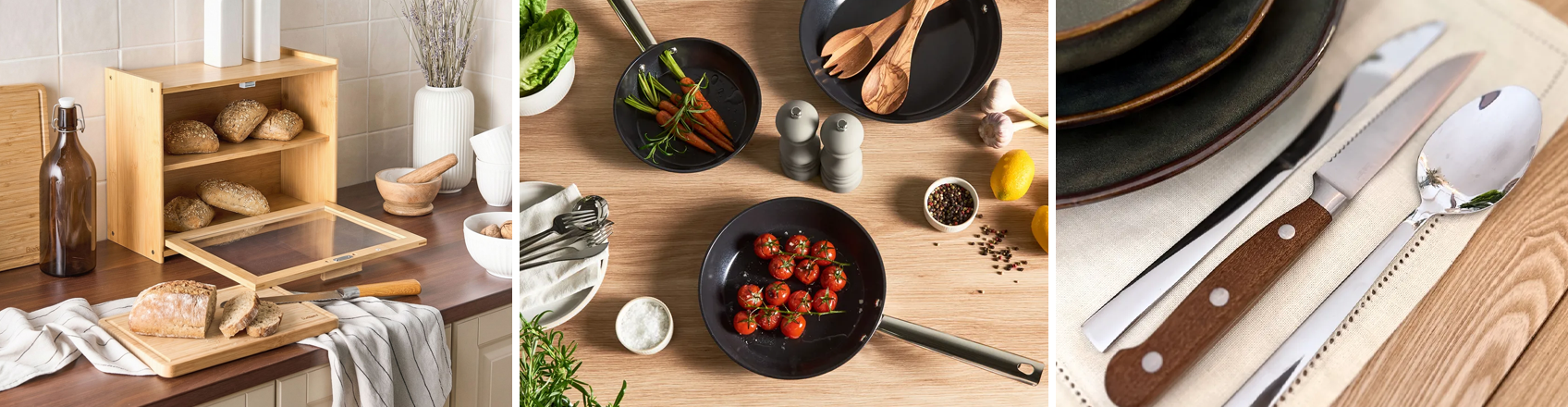
The right kitchen accessories make everyday cooking faster, easier, and more enjoyable. This category covers the essentials - cookware, knives, chopping boards, bread bins, and organisers - chosen to work hard in a real kitchen rather than just look good in one.
What materials should you look for?
Kitchen accessories span a wide range of materials, and the right choice depends on what the piece needs to do. Durability, ease of cleaning, and how something interacts with heat or food all matter more than appearance alone - though the two don't have to be in conflict.
Stainless steel
Stainless steel is the default choice for cookware and many kitchen tools for good reason. It's corrosion-resistant, easy to clean, tolerates high heat, and doesn't react with food. For pots and pans, look for pieces with a multi-layer base that includes an aluminium or copper core, which distributes heat more evenly than a single-layer steel base.
Wood
Wood earns its place in the kitchen through a combination of practicality and warmth. A wooden chopping board is gentler on knife edges than glass or ceramic alternatives, and wooden bread bins and storage pieces add texture that softens an otherwise hard-surfaced kitchen. Look for sustainably sourced hardwoods like acacia or beech, which are dense enough to resist moisture and surface damage over time.
Cast iron and enamelled cookware
Cast iron retains and distributes heat exceptionally well, making it ideal for dishes that benefit from steady, even cooking. Enamelled cast iron adds a smooth, non-reactive surface that requires no seasoning and is significantly easier to clean - a good choice if you want the performance of cast iron without the upkeep.
Which accessories does every kitchen need?
A well-equipped kitchen doesn't require a large number of pieces - it requires the right ones. Most of what gets used every day comes down to a reliable set of cookware, one or two good knives, a sturdy chopping board, and somewhere sensible to keep bread and small essentials. Getting these basics right makes everything else easier.
Pots and Pans
A core set of three or four pieces covers the majority of everyday cooking: a frying pan, a medium saucepan, and a larger pot for soups, pasta, and stews. Sets offer better value than buying individual pieces and keep sizing consistent, which helps with storage. If you have an induction hob, always check compatibility before buying.
Shop all: pots and pans
Knives
A sharp, well-balanced knife makes every kitchen task safer and less effort. For most home cooks, three knives are enough: a chef's knife for general use, a paring knife for detail work, and a serrated bread knife. Quality matters far more than quantity here - a single well-made chef's knife will outperform a full block of mediocre ones. High-carbon stainless steel blades with a full tang offer the best combination of sharpness, balance, and longevity.
Shop all: knives
Chopping Boards
A good chopping board protects both your worktop and your knife edges. Wood is the most knife-friendly surface and develops character with use, while plastic boards are lightweight, dishwasher safe, and easy to sanitise - making them a practical choice for raw meat and fish. Having one of each covers most needs without taking up too much space.
Keeping the kitchen tidy and organised
Storage accessories don't just reduce clutter - they actively make cooking more efficient by keeping ingredients fresh and tools within reach. A few well-chosen pieces can make a meaningful difference to how the kitchen feels on a daily basis, even in a smaller space.
Bread Bins
A bread bin keeps loaves fresh for longer by maintaining the right balance of airflow and humidity - far better than a plastic bag on the worktop. Most designs sit neatly on a countertop and come in materials ranging from stainless steel and enamel to wood and bamboo, so it's easy to find one that fits the look of your kitchen.
Shop all: bread bins
Kitchen Organisers
Kitchen organisers cover everything from utensil holders and spice racks to drawer dividers and worktop caddies. The best approach is to identify where your kitchen feels most chaotic and work from there - a well-placed organiser in the right spot does more good than a complete overhaul. Look for materials that are easy to wipe down and sizes that fit your existing drawers or shelves before buying.